Wings of love to people in need

23 June 2016

All Eyes on Malawi


The precious cargo that Mercy Air flies to remote parts of Southern Africa comes in all shapes and sizes. Recently Azarja Groot, one of Mercy Air's pilots flew some very specialised ophthalmology equipment to Blantyre, Malawi for setting up in a mission clinic on the other side of the border in Mozambique.
Fitting it all into our twin Cessna 310 took considerable effort. All the seats had to come out (except the essential one), and some of the boxes were repacked.
One of the big prayer items on a trip such as this is getting everything safely through Customs.
At the Kruger airport in South Africa there were no issues. A customs form, itemised manifest and quick chat with the official were sufficient.

The four hour flight was uneventful (as they should be), with sufficient time for a selfie.

In Blantyre the Doctor and his medical mission team flew in frfom Johannesburg on a commercial flight just prior to our arrival. The timing worked out perfect.


Together with the Malawian customs officials and the team, we unloaded the aircraft directly into the mission vehicle. Again there was no red tape.

It was a privilege to meet Dr Chris Blignaut and Dr Johan Eloff, two men who had spent many years serving as missionary doctors at Nkoma hospital in Malawi (http://nkhomahospital.org.mw/dept/eye.php).
Before saying our goodbyes, we had a coke. God had answered our prayers to safely bring everything through.

The team went on to Milange, a border town in Mozambique, well equipped to restore vision to people who would otherwise never have access to this type of care.
Azarja flew back the following day, thankful that Mercy Air was able to play a part in making a positive difference.

Three days later we received word that the team had already seen 350 patients!


Thank you to all who play a part in bringing wings of love to people in need.

Azarja for the Mercy Air team.

09 June 2016

Serving Together

Recently Mercy Air was able to help a fellow aviation ministry by ferrying their Cessna 206 from South Africa to Zambia. The mission plane, operated by Wings of the Morning, had undergone extensive maintenance in South Africa and was now ready for service in the DRC.

Mercy Air pilot, Azarja Groot, planned to fly to Lusaka via Livingstone on  Saturday as on the Monday he would be able to catch a flight back to Mercy Air with Flying Mission in another aircraft, that just ‘happened’ to be coming to South Africa for maintenance.
Plans changed quickly on Saturday when the engine monitor began indicating a problem on a cylinder less than 30 minutes into the flight. Better to head back for a closer look.
Dan Gabler and his brother Steve, who had done much of the maintenance, were surprised to see 9Q-CMM, the 206, back so soon.
The remainder of the day they worked hard to resolve the indicated engine problem. Late Saturday evening, the aircraft was declared ‘ready to go’.
Sunday morning Azarja departed, once again. The first leg of the trip, Kruger to Livingstone would take about 5 hours. The scenery was beautiful.
All was going quite well until the alternator suddenly quit. With less than 3 and a half hours to Livingstone, Azarja, decided to continue. All non-essential electrical items were shut down, but over the next few hours the battery was slowly used up.
By the time Livingstone came into sight, the aircraft radio was no longer usable. The handheld radio, which normally just adds weight to the flight-bag could finally be put to some good use. A flap-less landing would also have to be performed. No worries, the runway was 3Km long!

On the ground in Livingstone Azarja quickly discovered the culprit. The terminal end of the field wire to the alternator had broken off. A few tools and some creative maintenance rectified the alternator problem, but now to find a jump-start.
Much to his surprise, Livingstone was able to provide a jump-start with a proper GPU (for a small fee of course).

After the usual paperwork and refueling, it was time to continue the flight to Chilongolo near Lusaka, the base of operations for Flying Mission in Zambia. Over the course of the next hour and 45 minutes of flying Azarja watched with satisfaction as the alternator recharged the battery.

On the ground, there was the warm welcome of a fellow mission pilot, a meal, some rest, and an early flight back to Mercy Air the following day.

9Q-CMM would be picked up later in the week, flown to Congo, to serve as a taxi, an ambulance, and an ambassador of God’s love.

Thank you.

Azarja, for the Mercy Air team.

29 April 2016

April Update

We are a bit overdue for a general ‘state of the nation Mercy Air’ address but hopefully this can fill people in on some of the nitty gritty of what we have been doing recently.

The good news is that we all continue to be busy here and keep healthy. There have been, and continue to be, some obstacles to overcome especially on the flying side.
The two main issues concern our access into Mozambique.
Moz Civil Aviation have been trying to comply with worldwide standards the last year or so (which is a good thing) but they have instigated and been over zealous with a number of rules and regs designed to show to the world that they’re serious.

One of these has concerned ‘cabotage’ which is where a foreign operator provides a service in another country. It would be like Lufthansa offering a regular service from London to Newcastle when there are UK companies who can do it. Usually you’re allowed to fly into the country and then a local operator will provide onward travel. We have traditionally flown into a Moz port of entry and then gone on to other destinations with our passengers, maybe even flown around a bit and then left. This is OK if it’s you’re private plane owner but we are technically a commercial operator because we charge for our services. At least we take our own passengers but our heli almost always goes in empty and ferries Mozambicans around – even though they are doctors, nurses etc. With the rules being policed more avidly we have had a number of occasions where we planned a trip but the flight permit we apply for a week before we go was refused. We were told that we could only fly to the first port of entry and then a local operator must continue with the rest of the journey. We can see the sense and legality of that, but there is usually no other operator to do this.
We flew over to see the authorities a couple of times to present our case and got a reasonable response – although not quite the one we would have opted for. They understand what we do, that we are non-profit and that we are there to help the country and its people. They will give us a temporary waiver for the time being on the understanding that we will apply for a Moz operator’s permit – which we hope could take years. This is awkward as we don’t want to register our aircraft in Moz as then we wouldn’t be able to offer a commercial service in SA or go to other countries if requested. Pilots would also need to get a Moz commercial license which is written in Portuguese and the chance of that happening for the likes of us who struggle with English, pertains to zero.

These things, although frustrating and causing delays, can be overcome – eventually.

This doesn’t mean we’re not flying though. We have a number of requests for ‘commercial’ lodge hop transfers usually within the Lowveld but sometimes to/from Jhb Int. This helps keep us current and last year we were able to fund three mission outreaches to Moz from the money raised.
Another issue though is probably even more African – political unrest. Whilst falling short of advising against all unnecessary travel in Moz UK Government advisories state:

‘There are high tensions in Mozambique mainly between the opposition party’s militia and state security forces.
There have been armed attacks on vehicles and police are escorting traffic in certain areas in convoys which have themselves been targets of fatal attacks. ‘

There is sporadic fighting between RENAMO and the government forces of FRELIMO only 60km north of Chimoio (our most visited mission base) and almost daily we hear missionaries reporting incidents. This type of situation, where the main opposition party controls its own army is highly unusual and casts a shadow over the country’s economic and political stability. The problem is that the areas of concern are where we fly to most often. The two main missions we fly in support of in the central parts of the country have advised us not to visit them for the time being. It remains to be seen how the situation will evolve in the future, but an escalation of tensions should not be excluded as a possible scenario.
Because we can’t fly up north right now, we have intensified our flying in the southern parts of Mozambique. As well as the routine rural clinics with local nurses we can continue to fly for the local churches and missions. There is also the possibility of flying to the far north. We have also been approached by MAF who still exist in SA but don’t have any aircraft in the country as theirs have been re-located to S. Sudan and Kenya where they can be better utilised. They have medical and education programmes into some of the more remote northern areas of S. Africa which they have asked us to help with. The heli side have also had meetings with the Swazi Civil Aviation with a view to providing help with rural clinics.

So, challenges on the Mercy Air side but we can see light at the end of the tunnel and there are a few possible alternate developments coming as a result.

Rain – or rather the lack of. I know it’s not just the Lowveld, South or even southern Africa but by now dams should be full after the summer rain. Our local one is at about 45% which I don’t think will be enough to see the area through the winter.

Thank you

Mercy Air team

17 April 2016

17 April 17 Luaue Village, Marroumeu, Mozambique

There were only a few women and children watching as the Mercy Air helicopter arrived. The next medical clinic was not until next month, and no one knew why it was here. Curiously, the villagers watched as the pilot, Joel, unloaded two heavy burlap bags from the helicopter. Suddenly it clicked: the helicopter had brought food! The villagers raced forward to help unload bag after bag of rice, beans, and sorghum.


In times of desperation, it can be easiest to revert back to one’s cultural history. This is often the case in the villages of the Zambezi Delta of Mozambique, and when two years of drought and hunger hit the village of Luaue, some families were tempted to abandon their faith in God and call a witch doctor to try to alleviate the situation.

But there was at least one family whose faith would not waiver: Costa and Graça and their four children. Having been a witch doctor herself for many years, Graça knew that resorting to witchcraft could only make the situation worse. In her years as a witch doctor, Graça had eight miscarriages, and it was not until she gave that up and became a Christian, that her first son, Hambir was born. That was eleven years ago, and the family has held strong to their faith in God ever since.


Though some were tempted to call on witch doctors to help, Costa encouraged the people to stand firm in their faith in God. Those families whose gardens produced a crop shared with those that had none, and until now, everyone has had just enough to eat. Even so, Costa explained that what they had left would run out very soon.

Finally, the village saw their prayers and faith answered when the Mercy Air helicopter arrived unexpectedly in their village bringing three thousand kilograms of food from the World Food  Program.
In Costa’s words, “I didn’t think this day would come. But today, I can only thank God because our situation has been seen and heard. I did not think this could really happen so I am quite surprised and happy. There are some who’s faith was low, but now we can see that God is taking care of us every step of the way.”

Thank you,

Joel

For the Mercy Air team

26 November 2015

Deepest Darkest Northern Mozambique - for the seventh time

Last week Mercy Air flew up to Nacala in N. Mozambique along with Allan, Mercy Air's CEO and Dave, an electrician. We routed up via Blantyre in Malawi but returned direct. The trip involved over 12 hrs of flying, 2200 miles (3500 km) and a number of diversions. The one flight on the way back was 5 hours alone.
As usual in N. Moz we got to fly past some pretty spectacular scenery.
We flew in support of Martin and Simone Schumann who have been working for Globe Mission for many years now.

In the past we have taken consignments of Artemisia tea, used in combating malaria, as well as solar powered MP3 bibles. This time we were tasked with wiring plugs, sockets and lights in a new building but we also took up a few thousand bibles...
...and a plane load of other supplies that they find hard to obtain in the bush.

Good job he had a 4x4 and a big roof rack!

Before the electrical work could start we had to put the roof on.
Then the cabling could begin.
Many of the light fittings had to be 'adapted' to make them work properly.


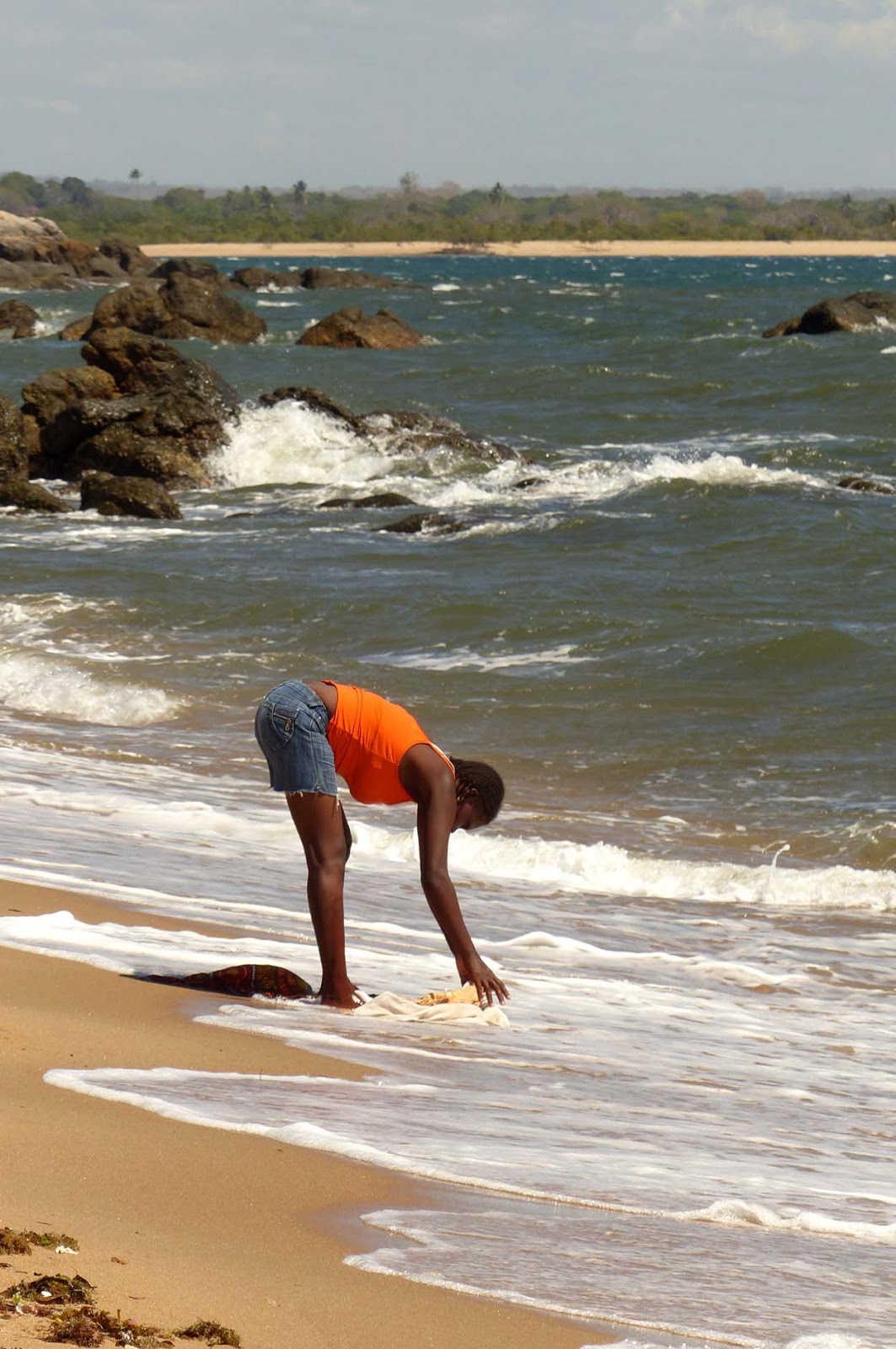
As in many places across Africa water is an issue and many people wash certain items of clothing in the sea.
The Schumann's do everything they can to collect and conserve water and every roof surface is plumbed into giant plastic tanks or stored underground.
One of the things that needed fixing was the pump that transfers the water to a tank on the roof so that they can have running water in the house. It did actually almost take three of us to get it going!

Being miles on questionable dirt roads from anywhere takes its toll on vehicles and so we had bought up some spares to help keep things running.
Oil change

Brakes
Even the motorbike got some attention
Cathy got bust with a number of things including a few trip to town with Simone to see lady's who were ill. First she had to dress up 'appropriatley' for the culture which wasn't so pleasant considering the immense heat all the while. She didn't take a camera so no pics - sorry.
As the beach is only 30 metres from the house we did get o col off in the sea (if you can cool off in water that is 30 deg C).
It was interesting to see the locals fish which at this time of year is about the only food there is. They would row out in their boats...
..drop a net...
..and then guys on the shore would pull it in.
The only other food that seemed readily available were mangoes.
So we ate quite a few of those!
Then it was back to fixing things. Here we are mending a sewing machine foot pedal.
And then a generator for when the power goes off - again!
On the Sunday we took a little time off and walked along the beach to a little cove which was also a little short on shade. Towards the end there were some amazing Baobab trees.
This path was far too hot to walk on bare foot.
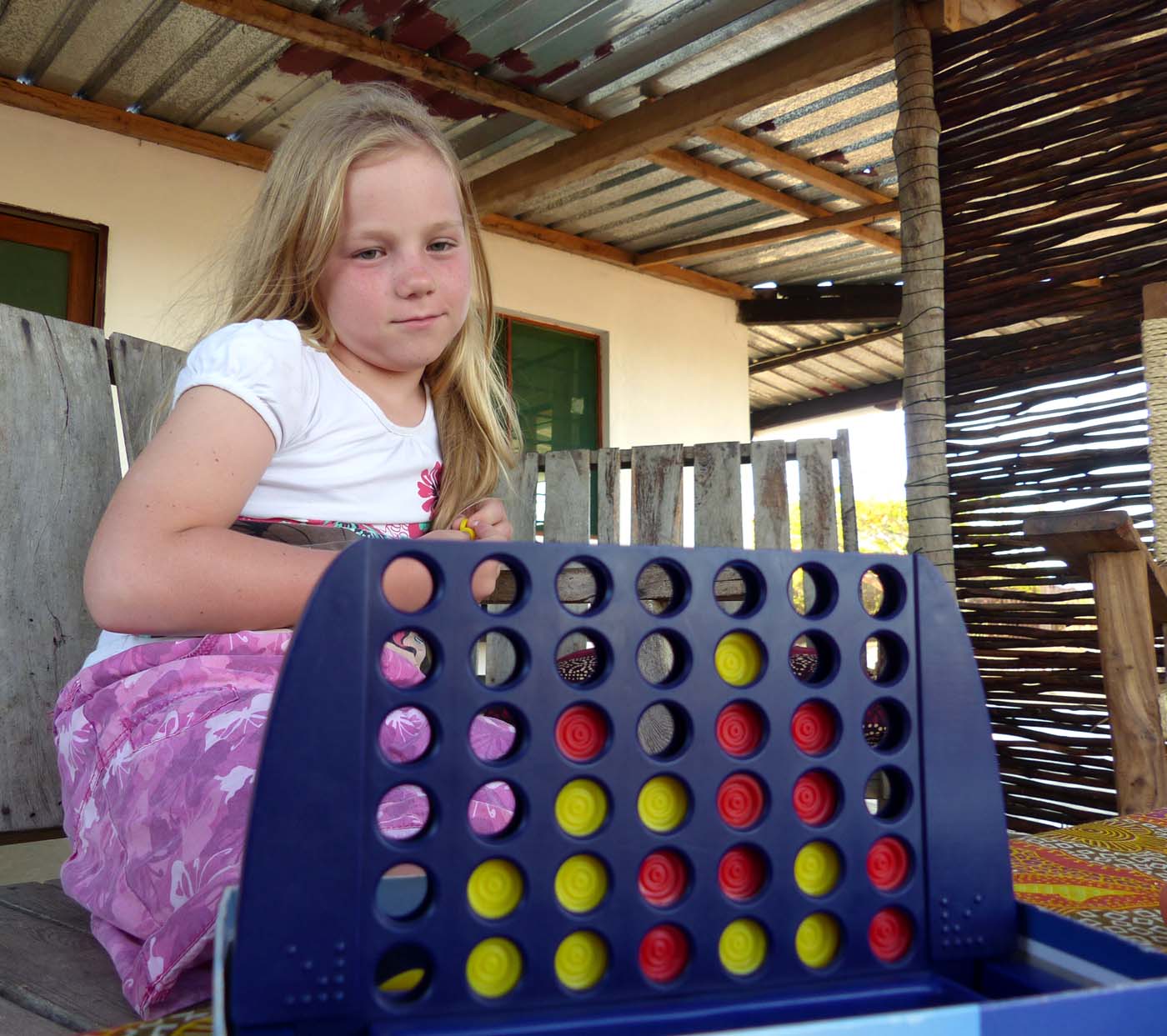
Meanwhile back at the ranch, red or yellow is about to win - but I can't remember who's turn it was next.
Then before we knew it it was time to leave and the two hour bumpy ride back to the airport. Nacala used to be a military airport and there are still some Mig 21's in a hangar.
Thank you

Mercy Air team